
All you need to know about the Space X Falcon 9 and crew dragon capsule
- theengineersway1

- May 29, 2020
- 3 min read
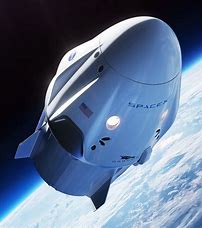


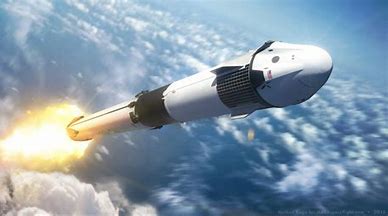
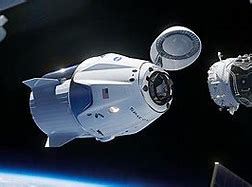
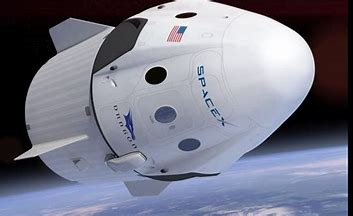
SpaceX is working with NASA to taxi two astronauts to the International Space Station following a delay caused due to weather problems. The journey is to be carried out with a Falcon 9 rocket and Crew Dragon capsule.
Here's how the Falcon 9 rocket and Crew Dragon capsule work, and what to expect:

Falcon 9:
The Falcon 9 is a two-stage reusable rocket, it first took flight on the 7th of June 2010. The first stage has nine Merlin engines and aluminium-lithium alloy tanks containing liquid oxygen and rocket-grade kerosene (RP-1) propellant, according to SpaceX.
The height is approximately 70 m with a diameter of 3.7 m. It weighs 541,300 kg with a Payload to low Earth orbit (LEO) of 13,150 kg and Payload to geosynchronous transfer orbit GTO of 4,850 kg. It has a burn time of 162 seconds in the 1st stage and 397 seconds in the 2nd stage. Which provides a thrust of 7,426 kN and 934 kN in vacuum respectively.
Falcon 9's primary structure was finished in April 2007, and the first multiple engine firings took place in January 2008. "The test firing validated the design of SpaceX's use of nine engines on the first stage, as well as the ability to shut down engines without affecting the functioning of the remaining engines," SpaceX wrote in November 2008.

Crew Dragon:
Crew Dragon is a variant of Dragon 2 class partially reusable rocket developed and manufactured and developed by American aerospace manufacturer SpaceX. The spacecraft launces atop a Falcon 9 block 5 rocket which returns to earth via an ocean splashdown.
Crew Dragon is equipped with an integrated launch escape system capable of accelerating the vehicle away from the rocket in an emergency at 11.8 m/s2. accomplished by using a set of four side-mounted thruster pods with two SuperDraco engines each. The spacecraft features redesigned solar arrays and a modified outer mold line compared to the original Dragon, and possess new flight computers and avionics.

How it works?
The first stage of the Falcon 9 carries the spacecraft 60 miles above the earth’s surface and separates (autonomously flies back to earth). Following separation, the2nd stage ignites to take the payload into orbit. On reaching the orbit, the payload (Crew Dragon) separates from the 2nd stage and carries out its mission. The Crew Dragon can perform manoeuvres to edge itself in the intended path(orbit). It can automatically dock with the International Space Station (ISS). The approximate time for the journey would be 24 hours after separation from the Falcon 9.
Why it’s Important?
NASA currently sends astronauts into space through the Russian Soyuz rockets launched in Kazakhstan. NASA retired its astronaut carrying shuttles in 2011 to make space for new space exploration program aimed at sending man to asteroids and other deep-space targets. NASA hopes to fill this void by using spacecrafts launched by private firms such as SpaceX and Blue Origin. Nasa astronauts Robert Behnken and Douglas Hurley will make their way on to a SpaceX Falcon 9 rocket at the Kennedy Space Centre on May 30. The ultimate aim of the mission is to dock a SpaceX craft containing the astronauts on the International Space Station. The mission, dubbed Demo-2, is set for lift-off from the Kennedy Space Centre in Cape Canaveral, Florida, at 8:23pm BST (3:23 pm ET) on May 30.
"Crew Dragon will accelerate its two passengers to approximately 17,000 mph and put it on an intercept course with the International Space Station," Nasa said.
"Once in orbit, the crew and SpaceX mission control will verify the spacecraft is performing as intended by testing the environmental control system, the displays and control system and the manoeuvring thrusters, among other things."
About 24 hours after launch, Crew Dragon will be in position to dock with the space station. "After successfully docking, Behnken and Hurley will be welcomed aboard station and will become members of the Expedition 63 crew, they will perform tests on Crew Dragon in addition to conducting research and other tasks with the space station crew.", said NASA.
The Crew Dragon capsule will remain docked on the ISS until it's needed to take astronauts back to Earth. Nasa has not yet selected a date for the return flight.
-Yash Sunkle


Comments